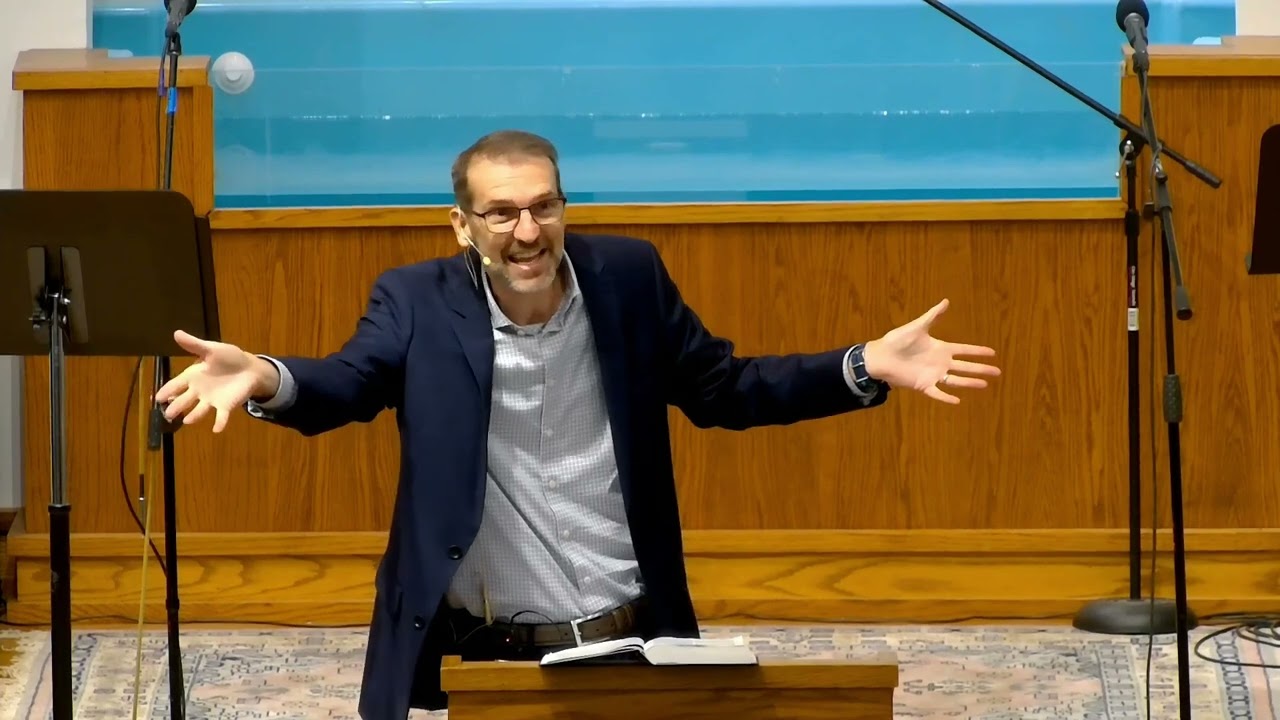
In last week’s sermon manuscript, right after naming my first point, I wrote, “I want to start my sermon on this note because this is where Paul begins this text.” If I had a dollar for every time I said something like, “I’m saying this because that’s what the text says,” I’d be a wealthy man. And yet this morning I want to do the opposite. I want to start by saying something the text we’re looking at this morning says very, very little about.
As you can see, the text we’re looking at this morning is similar to the one we looked at last week. In 3:1-7 Paul discusses pastors and their qualifications, and in this text (3:8-13) Paul discusses deacons and their qualifications. Last week, however, I felt like I could explain what pastors are and do so by walking through the qualifications. This week, I don’t feel quite the same way. So I want to begin by saying something the text doesn’t explicitly say. I want to try to tell you what the office of a deacon is. Then, after doing that, I want to work through our text concerning the qualifications for one who is to function in that office in the church.
The term from which we get deacon simply means a servant or one who does something at the behest of a superior.1 And this word occurs throughout the New Testament, most often translated as, “servant” or “minister.” But the word “deacon” can also denote an office in the church that officially came about in Acts 6:1-6.
At that time, there was a food distribution program in the church for widows, and certain widows were complaining that they were neglected. And that put the apostles (who were serving as elders of the church in Jerusalem) in a predicament. They could stop their work of preaching the Scriptures and praying in order to tend to the widows being fed, and that would solve the widow problem, but it could cause them to neglect the crucial matters of the Word and prayer. Therefore, they said, “It is not right that we should give up preaching the word of God to serve tables. Therefore, brothers, pick out from among you seven men of good repute, full of the Spirit and of wisdom, whom we will appoint to this duty. But we will devote ourselves to prayer and the ministry of the word” (Acts 6:2-4). And they chose seven men whom they sat aside to oversee the food distribution ministry to widows. These seven men have historically been understood as the first deacons.
And we can see by the situation that these men were responsible to tend to the physical needs that came up in the life of the church as the members walked together in order that the pastors could devote themselves to the Word of God and prayer. And this is a position or office that local churches have recognized and appointed men to fill since. You can no doubt see why. It’s difficult to overstate how important their work was—and is. If a church doesn’t have deacons to tend to these things, then pastors will devote most of their time to them, and the preaching of the Word of God will suffer—as will prayer and the general oversight of the church.
Our deacons do an exceptional job of this. Ryne Cali oversees the work of maintaining our facilities. Tim Ellsworth oversees financial matters related to caring for the members of the church in addition to a host of other matters. David Matlock oversees all things related to security. Jon Putt oversees the music ministry. And Jeremy Rasnic oversees everything on the technology side of ministry. And I’ve used the word “oversee” intentionally. They aren’t necessarily the ones doing everything that’s required in these areas of need. Many of you all—our members—volunteer to play crucial roles in meeting these needs (as you can see, for example, that Jon isn’t the only one on stage leading us in singing). But deacons bear ultimate leadership and responsibility for these areas and even oversee handling the church’s budgeted finances in meeting these needs.
With that said, deacons aren’t elders—as they’ve sometimes functioned in Baptist churches. Elders are responsible for overseeing the church as a whole and will give an account to the Lord for that. But deacons function under them in a crucial and necessary role of service, ensuring the daily needs of the church are met. So, with that in our minds, what should deacons be like? Well, like elders, deacons should have exemplary character.
I used the same description I used for elders last week because, as you can see, Paul’s list of qualifications for deacons is strikingly similar. Paul doesn’t require them to be “able to teach” as he does with elders for the obvious reason that their roles are different. But you’ll notice that the qualifications are much the same. Anyone who serves as a deacon should be of exemplary character. Let’s look at this by walking through the qualifications one by one.
First, Paul says, a deacon should be dignified (v. 8). That is, he must be a respectable man, who is looked up to by others. He also adds that he must not be “double-tongued” (v. 8). Now, that’s not necessarily a phrase we use, but we no doubt get the idea. Paul means that he must be honest and truthful, meaning what he says, not saying something one moment and the opposite the next. Then, similar to qualifications with elders, Paul mentions that he must not be “addicted to much wine” and “not greedy for dishonest gain” (v. 8). Just as we mentioned last week, a deacon must not get intoxicated, drinking too much alcohol, and he must not be greedy for monetary gain but generous and giving. Then, in verse 9 Paul writes, “They must hold the mystery of the faith with a clear conscience.”
What’s interesting here is that this is where Paul noted about elders in the previous section that they must be able to teach. And, as I noted, because the roles of elders and deacons are different, and deacons aren’t required to teach the Word to the church, Paul doesn’t list that qualification for the deacon.2 But though Paul doesn’t mandate a deacon teach, he does mandate that with a clear conscience a deacon must confess that he holds to the mystery of the faith, which is a phrase that indicates the gospel and all truth rooted therein. When we question a deacon about his doctrine, he must, without wavering, confess that he holds to the gospel and all gospel-rooted truths revealed in Scripture.
Let me skip down to verse 12 briefly to note two other qualifications we saw in last week’s text as well. Paul says that a man who would be a deacon must “be the husband of one wife, managing their children and their own households well.” That is, he must be sexually faithful to his wife (not being adulterous, flirtatious, or given to looking at pornography or the like), and he must love and discipline his children faithfully as he leads his home. Again, as I noted, these all sound strikingly similar to what Paul demands of elders and the Bible demands of all men in the church.
Then, Paul adds in verse 10 that a deacon needs to be proven first, showing himself to be characterized in this way over some time instead of quickly being appointed to this office. Paul will say something similar about elders in 5:22, warning Timothy not to lay hands on someone too hastily. A man who would be a deacon should show himself faithful and holy over a period of time. And, so, we can conclude, as we did last week, that a deacon, like an elder, must be of exemplary character. He should be one who models Christian living for others.
Now, you may have noticed that I’ve skipped verse 11, and that’s because this needs some extra time and attention. In that verse, Paul writes, “Their wives likewise must be dignified, not slanderers, but sober-minded, faithful in all things.” That may seem straightforward enough, but what makes this verse tricky is that the word translated “wives” may also be translated “women.” Therefore, you could read this verse as if Paul is talking about certain qualifications that need to be true of the wives whose husbands would serve as deacons or as if Paul is giving qualifications for women who would themselves serve as deacons. You can see that the ESV translates this as referring to deacons’ wives, which I think is probably what Paul intended, but let me give you arguments for taking it each way. The arguments for seeing this as a reference to women deacons would be:
First, if this is a reference to deacons’ wives instead of women deacons, why wouldn’t Paul have mentioned anything about elders’ wives in the qualifications for elders? I mean, if it’s important that deacons’ wives meet certain qualifications, wouldn’t it also make sense that elders’ wives meet certain qualifications as well? However, this can be explained if we say it’s referring to women deacons, not the wives of deacons. In that case, we know why Paul wouldn’t mention women when speaking of qualifications for elders, and that’s because women are prohibited from teaching men and exercising authority over them—the very tasks required of elders. But one arguing for women deacons would say that it’s not clear, necessarily, that deacons are required to do any tasks that Scripture prohibits women from doing.
Second, the pronoun “their” in the ESV isn’t there in verse 11. It simply says, “the wives” or “the women.” Wouldn’t it say, “their wives” if Paul were referring to the wives of deacons? However, the pronoun not being there makes sense if Paul is simply referring to women.
Finally, in Romans 16:1 Paul makes reference to a woman named “Phoebe” whom he identifies as a “servant of the church,” but the word translated “servant” (διάκονον) is from the same word as that which is translated “deacon” in our text, leading some to think that Paul refers to Phoebe as a deacon of the church.
So, those are the arguments for thinking Paul is giving qualifications for women who would serve as deacons in verse 11. They’re logical and rooted in looking carefully at the biblical texts. And solid churches which I would happily join have women serving as deacons. In other words, this isn’t an area over which to divide from dear brothers and sisters. But, with that said, I don’t think the arguments for verse 11 referring to women deacons are very strong once carefully scrutinized. Moreover, I think the arguments claiming that Paul is referring to the wives of deacons are strong. Therefore, I’m convinced, at this point, that verse 11 is a reference to deacons’ wives. Let me give you arguments for why I think so, starting by responding to the arguments claiming Paul is referring to women deacons.
First, it’s true that the pronoun “their” isn’t in the text and is supplied by the ESV when they start verse 11 in our Bibles with the words, “Their wives.” But, if Paul intended that to be “wives” instead of “women,” wouldn’t he write “their?” Well, not necessarily. It’s actually common in Greek to omit the possessive adjective when the person named would have an obvious relation to the thing or person being discussed.3 In other words, when Paul writes, “The wives,” it’s obvious whose wives he’s talking about—those men serving as deacons. And so there would be no need to include “their” in referencing the wives of deacons.
Second, as far as Phoebe being called a servant (or deacon) of the church in Romans 16:1, Timothy himself is called a good servant (or deacon) of Christ Jesus in 1 Timothy 4:6, with “servant” (διάκονος) coming from the same word referenced by Paul with regard to Phoebe. And Timothy wasn’t a deacon. Rather, Paul was referring Timothy as a “servant,” the same thing I believe he meant with regard to Phoebe. In fact, this Greek word rarely refers to the biblical office of deacon, as it almost always refers to someone being a servant (or minister). In Paul’s letters, he uses a form of this word twenty-one times, and only three times is it obvious he means “deacon” (here in verses 8 and 13 and in Philippians 1:1 where Paul opens the letter greeting the “overseers and deacons” at the church in Phillipi). In seventeen occasions where the word is used, it’s clear Paul does not mean “deacon.” And then there’s his reference to Phoebe. So, I think it is much more likely than not that Paul is referring to Phoebe in the same way he regularly uses the word, namely, as a servant of the church.
Then, though it’s fair to note that elders’ wives aren’t mentioned in Paul’s list of qualifications for elders, I think this makes sense with a little thought. An elder’s wife isn’t going to be involved in the tasks that her husband is as he teaches and “rules” (1 Tim 5:17) the church. Women are specifically not authorized to teach or exercise authority over men (1 Tim 2:12). But you would think that if a deacon is involved in serving the church in matters like making sure widows are fed and cared for, then deacon’s wives would be closely involved in that ministry. And that would demand that they meet certain qualifications, like being dignified, not slandering, but being sober-minded and faithful, as verse 11 says. Therefore, we can see why Paul would list qualifications for deacons’ wives while not doing so for the wives of elders.
But the argument that this text refers to deacons’ wives isn’t simply built upon answering the arguments from the other side. There are also positive arguments. Let me try to walk through them briefly.
First, note the flow of the text. If you see verse 11 as referring to qualifications for women deacons, then it’s simply an odd way for Paul to write. Let me explain. We know that verses 8-10 refer to a different group than verse 11 because the qualification of being “dignified” is repeated. It’s mentioned in verse 8 and in verse 11. And everyone acknowledges that the group Paul addresses in verses 8-10 are men who would serve at deacons. Now, if you think that group being addressed in verse 11 are women who would serve as deacons, then you have to say that Paul writes verses 8-10 about qualifications for men and then switches (in verse 11) to address qualifications for women. That’s fine to this point. But then it’s clear that he’s addressing qualifications for men again in verses 12-13 because the first qualification mentioned in verse 12 is that the deacon must be “the husband of one wife.” Therefore, if verse 11 is a reference to women deacons, then Paul would write verses 8-10, focusing on the qualifications for male deacons, would switch over to focus on the qualifications for female deacons in only one verse, and then would switch back to focusing on more qualifications for male deacons. That just isn’t a natural way to write.
If verse 11 is referencing deacons’ wives, on the other hand, I think the flow makes sense. Paul speaks of the qualifications for deacons in verses 8-10, focuses on the qualifications for their wives in verse 11, and then, having launched into the realm of the deacon’s family, continues that theme in verse 12, focusing on the man needing to be faithful to his wife and manage his children and household well.
Also, if you took verse 11 as referring to women deacons while verses 8-10 and 12-13 clearly refer to male deacons, then Paul would have listed a great number of qualifications for male deacons while listing only a few for female deacons. That doesn’t make sense if it’s for the same office. Surely Paul didn’t have lower standards for women who might serve as deacons. Moreover, it’s hard to argue that Paul just didn’t want to be repetitive when he doesn’t mind repeating the word “dignified” in v. 8 and 11 and repeats many of these same qualifications for elders in the previous paragraph and then again when talking about widows enrolling in the ministry relief program in chapter 5, noting that she must be the wife of one husband, hospitable, having a good reputation, etc.—all qualifications we’ve seen Paul mention repeatedly before. Paul clearly doesn’t mind being repetitive.4
Finally, if the Lord Jesus Christ intended for the office of deacon to be filled by men and women, then it’s strange that the first deacons chosen in Acts 6:1-6 are all men. And it’s not like they chose only one or two. They chose seven, and not one of those seven was a woman. What’s more, these first deacons were chosen to make sure widows were getting fed, a task that seems to lend itself to an area where women in that world would have excelled. In fact, I have no doubt women in the church worked to meet these very needs, but those chosen to be deacons and bear the responsibility to make sure these needs were met were all men. Again, that’s an odd thing if the Bible intended the office to be filled by men and women.
Therefore, though I don’t think this is an issue to divide over and I am not confident enough to claim that churches with women deacons are disobeying the Bible, I do think that the evidence points in favor of the Bible reserving the office of deacon to men and that verse 11 is a reference to the wives of deacons, who would frequently work alongside of their husbands in making sure that that the physical needs of those in the church were met.
And, again, as we think about it, this makes sense. The role of deacons is to meet demands of the physical ministry of the church (i.e. not those tasks given to elders). In the first century church, much of that ministry involved meeting the needs of widows. In our day, we continue to have that need, as well as many other things that involve the handling of money, for example, as we seek to meet members’ needs through the “storehouse” ministry of our church. And in these tasks, the deacons’ wives will work very closely with them. Therefore, you can see why Paul would say that the wife of a deacon must be dignified, not be a slanderer, but be soberminded and faithful. If a deacon is exposed to someone’s financial needs as he cares for them, for example, and his wife is given to slander or isn’t trustworthy, you can see how devastating that would be.
It seems to me then that the scriptural expectation of a deacon is that he exercises a degree of authority in the church as he determines how the church’s resources are used to meet the needs of its members. This will involve all the members of the church serving alongside of him in meeting these needs (especially his wife on occasion), but he bears the ultimate responsibility in ensuring these needs are met and the church’s resources are used faithfully. Therefore, we can see why Paul would demand that these men be of exemplary character as they tend to the church’s needs. And we can see why Paul would demand that such character is proven over time before we would put such an important responsibility into their hands.
And let me say one final thing about these men. A man who serves faithfully as a deacon brings great blessing to himself.
As Paul ends this section on deacons, he writes, “For those who serve well as deacons gain a good standing for themselves and also great confidence in the faith that is in Christ Jesus” (v. 13). That is, Paul is telling us that it is a great blessing to serve well as a deacon. This ending is akin to how Paul begins the section on elders, starting that section by telling us that one who desires to be an elder/pastor/overseer desires a noble task. It seems Paul is doing something of that sort here.
Those who serve faithfully as deacons bring two blessings to themselves. First, they gain a good standing in the church. This probably means that the congregation will begin to esteem these men, think highly of them, and honor them. I think that’s proved true in the case with our deacons. But they will also gain “great confidence in the faith,” Paul says. In other words, as they walk in faithfulness in this task, they not only become honored among their fellow believers but their obedience to Jesus will lead to them having greater confidence in the faith they are holding to.
In other words, though a deacon is an office of service, there’s nothing lowly about the office or the work these men do. It’s an honorable labor that brings great blessing to those who labor to serve the church in this way. And, if we need a reminder of the greatness of serving, we need only remember our Lord, who did not come to be served but to serve and to give his life as a ransom for many. So, let’s remember and give thanks to our crucified and risen Lord now as we come to the table. Amen.
Series1 Timothy