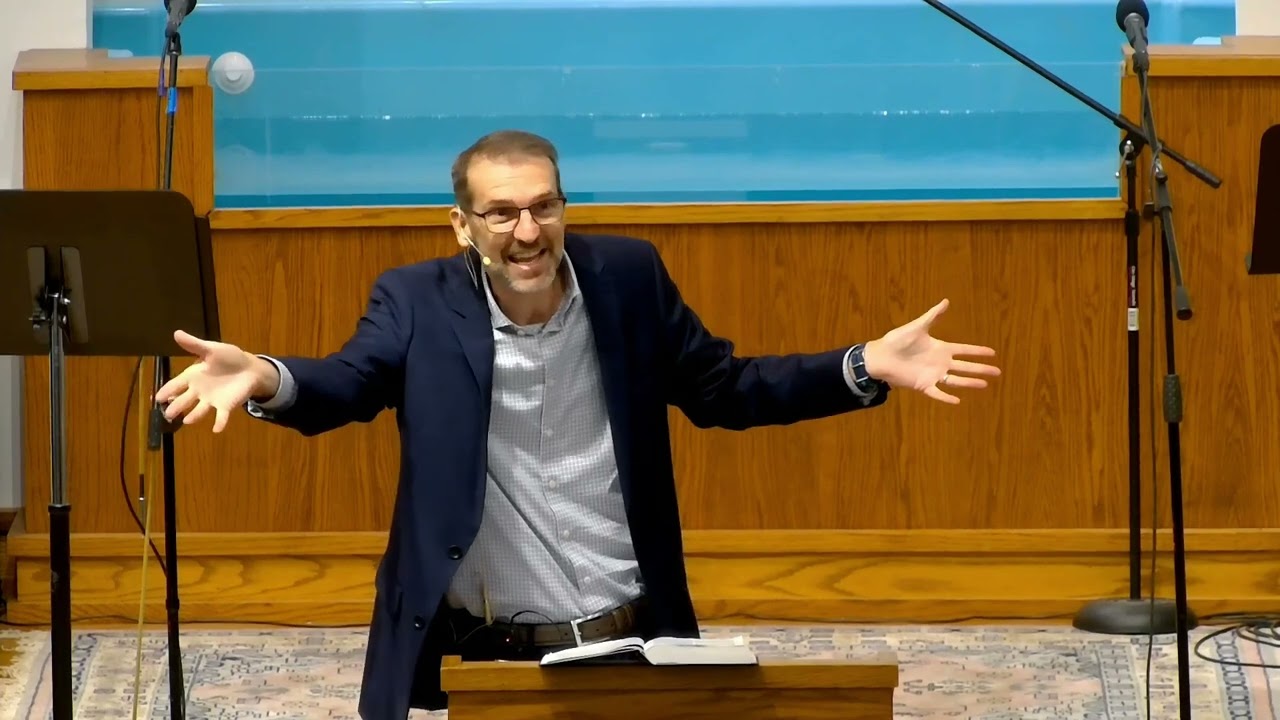
There’s a way that you can describe what we do each Sunday in quite mundane terms. We get together every Sunday, read out of the Bible, sing some songs, pray, spend some time explaining and exhorting one another from the Bible, eat a small, dried out bread-like structure, drink the smallest amount of juice possible, and then spend some time talking before we all go our separate ways to eat lunch.
But we know from the book of Revelation that we can also describe what we’re doing as war. There is a dragon who sought to stop the Son from fulfilling his redemptive work as he came to live, die, and be raised. But the dragon failed. And he was cast down to the earth, no longer able to accuse the Lord’s people in heaven. But the dragon’s failure didn’t stop him. Instead, he just directed his vitriol toward the Lord’s people. He gave his power to wicked men who would oppress the Lord’s people through governments, would seek to deceive them through false teaching, and who would tempt them with all the allurements culture has to offer—riches, sexual immorality, power, and prestige. But the Lord told us that he reigns from heaven, has called us to be faithful to him, and has told us to endure till death because though our death will look like victory for the enemy, we will be conquerors—being raised to see Satan, sin, and death thrown into a lake of fire. And every time we gather, we are further equipping ourselves for and engaging in that war.
Well, it's into that spiritual war that Timothy has been thrust as Paul left him in Ephesus to pastor a church amidst all kinds of Satanic attacks. Through false teaching, appeals to unbiblical behavior, and the pull of this world, the enemy has already led many astray. And Timothy has been placed there in the Lord’s providence to wage war against the enemy and fight for the good of the church. Along the way, Paul has given him some specific instructions about all kinds of things that we’ve covered over the first fourteen messages in this series, but in this last chapter, Paul gives Timothy some final instructions. These final instructions should be seen as Paul’s final words to a man on the front lines of a battle, as Paul further equips Timothy to fight the good fight, hold fast to the faith, and guard the good deposit entrusted to him.
So what does Paul spend his final words in this letter saying? Interestingly, he focuses on what is driving these false teachers. In verses 3-5, Paul shines light on their nature and character. And as Paul unveils what drives these men, he reveals something we have not seen to this point, namely, that they are driven by money. And it’s on this note that Paul spends a decent amount of time in this section as he speaks of the blessing of contentment in verses 6-10 and then returns to the issue of money in verses 17-19 before giving Timothy one last exhortation in verses 20-21. But Paul doesn’t spend this entire time focusing on what drives these false teachers. He also tells Timothy in verses 11-16 what should drive him and all believers. And the answer isn’t money, which is fleeting, but that which is eternal.
Therefore, I’m going to work through this text, attempting to stress what Paul does. First, we’re going to look at what Paul says in regards to the false teachers as we see that desiring riches and setting one’s hope on money will lead to ruin and destruction. And then we’ll turn to Paul’s exhortation to Timothy and see that desiring persevering godliness and setting one’s hope on the life to come leads to eternal joy.
As Paul begins this last section of the letter, he once more urges Timothy to “teach and urge these things” (v. 2b) that Paul has told him, but then he turns his focus to false teachers specifically. But instead of warning the false teachers or telling Timothy to make sure they’re all driven out (things that he’s done previously), Paul exposes to Timothy what drives these false teachers. He writes, “If anyone teaches a different doctrine and does not agree with the sound words of our Lord Jesus Christ and the teaching that accords with godliness [those precise people are in the congregation at Ephesus], he is puffed up with conceit and understands nothing. He has an unhealthy craving for controversy and for quarrels about words, which produce envy, dissension, slander, evil suspicions, and constant friction among people who are depraved in mind and deprived of the truth, imaging that godliness is a means of gain” (vv. 3-5).
In short, Paul says that people who promote false teaching are not doing so because they’re ignorant of what is true and right. They’re doing so because of their evil nature. They are immoral in their character. He lists three qualities specifically. He says they’re conceited with the result that they understand nothing. They have an unhealthy craving for controversy so that they sow division. And they see godliness as a means for financial gain. Now, it’s this last one that Paul really focuses the rest of our text on, but let’s examine these first two qualities briefly so that we might recognize and be warned against these as well.
First, Paul mentions that they’re conceited with the result that they understand nothing. Brothers and sisters, beware of pride and being unteachable. One of the things that we as pastors most look for in those who come through the apprenticeship program is whether or not a man is teachable. If he is prideful, he will prevent himself from learning, and he will remain ignorant. And we believe that he’ll ultimately destroy himself and a church if he decides to take a position as pastor. Pride is a killer.
Faithful Christian teaching, by definition, is humble in its approach. We merely pass on what has been given to us. That’s why Paul tells Timothy to guard the “deposit” in v. 19. We didn’t create it. Our job is to preserve unstained what has been given and pass it on. So, let’s strive to be humble, teachable, and subservient to God’s Word.
Second, Paul notes that they crave controversy and like quarreling about words—probably meaning that they’re quarreling about the Word. They are the kind of people who always want to be challenging. They don’t like peace. They don’t like a healthy church community. They want to challenge, unsettle, push back against the Word. And the result of this is that they sow division among those who are susceptible, being ignorant of truth and with depraved hearts.
And I’ll note these two go together. The more prideful and unteachable you are, the more you’ll find yourself always wanting to challenge, to stir up controversy, and to sow division. You’ll always think you’re the one who is right while those around you are wrong. You know better than those around you. Let’s beware of this. But Paul ultimately focuses on his main issue in this text—money. He notes that these see godliness as a means of gain.
If you were alive during the eighties, we saw the rise and fall of Jimmy Swaggart and Jim and Tammy Faye Bakker. Today we see Joel Osteen—all individuals who got into the business of “godliness,” if you will, for financial gain. But we are wrong if we say, “Yeah, those people are crazy. I’m glad I’m nothing like them.” Rather, our response should be to look at our own hearts and see if we’re gripped by the desire for riches or setting our hopes on money. After all, Paul gives a strong warning against desiring to be rich. He says in verses 9-10, “But those who desire to be rich fall into temptation, into a snare, into many senseless and harmful desire that plunge people into ruin and destruction. For the love of money is a root of all kinds of evils. It is through this craving that some have wandered away from the faith and pierced themselves with many pangs.”
The desire for riches is like a gateway drug that lead to many other unholy desires that will ultimately lead to your ruin. A desire for riches will lead to envy and covetousness. It will lead to buying a house or vehicles you can’t really afford. You’ll stop being a giver or become a meager one. You’ll be greedy. And that’s just a taste. The Bible clearly says that if we desire riches and crave wealth, it will lead to our destruction. So fight it like you’re fighting adultery or murder or anything else that will ruin your life.
Okay, well, what is the antidote? Well, Paul gives us two main ones. First, be content with having your needs met. Paul gives us this antidote in verses 6-8. After noting that the false teachers are pursuing their warped teaching on godliness for financial gain, Paul notes that there is indeed gain when you pursue true godliness, but it’s not financial. He writes, “But godliness with contentment is great gain, for we brought nothing into the world, and we cannot take anything out of the world. But if we have food and clothing, with these we will be content.”
For many of us, we tell ourselves, “I’d be content if only I had . . .” and then what follows is an ultra-beautiful home, a nice car, the ability to travel the world, a savings account that’ll protect me from any financial need that comes my way. But Paul says that if we’re thinking that way, we’ve set ourselves up for ruin. Rather, we should say, “If I have food and clothing, with these [I] will be content” (v. 8). And by “food and clothing,” he simply means the basic needs of life. These things are what any believer needs to be content.
Now, it doesn’t mean you might not have more than that. It’s not sinful to have a nice home, nice car, or even a good bit of money in a savings account. Paul will address the wealthy here in a second. So you don’t have to turn down that raise at work, refuse a higher-paying job, or not purchase that home. But we’ve got to set our level of contentment at simply having our needs met, and the second you and I sense that we need more than that to be content, we need to wage war against that craving in our soul that could lead to our ruin. So, that’s the first antidote: strive for a settled contentment with having life’s basic needs.
A second antidote to that desire for riches and craving wealth is found in verses 17-19. Now, these verses feel oddly placed in our text. It almost feels like a PS. It’s as if Paul was wrapping up the letting to Timothy with a glorious doxology in verses 15-16, culminating with the words: “To him be honor and eternal dominion. Amen,” when all of the sudden Paul thought, “Wait, there’s one more thing I wanted to say about money. I want to say one more thing to wealthy Christians,” and so he picks back up with one final word in verses 17-19 before wrapping up the letter in verses 20-21.
He writes to Timothy in verses 17-19, “As for the rich in this present age, charge them not to be haughty, nor to set their hopes on the uncertainty of riches, but on God, who richly provides us with everything to enjoy. They are to do good, to be rich in good works, to be generous and ready to share, thus storing up treasure for themselves as a good foundation for the future, so that they may take hold of that which is truly life.”
Now, I know that in one sense, all of us are wealthy when compared with most of the world, and the things that Paul says Timothy must say to the wealthy need to be heeded by all of us in this room. However, there are many of us in this room who are wealthy even compared to our fellow Tennesseans and Americans. And so let me say a word to a few of you, and then I’ll note this antidote Paul gives to desiring riches or setting our hopes on money.
First, if you’re wealthy, Paul says you’re not to be haughty. Money itself is a gift from the Lord. Now, that doesn’t mean you didn’t work hard and weren’t strategic. No doubt you were, and that is to be commended. But you can work hard, be strategic, and wind up poor. It’s in the Lord’s hands, and everything you have, you’ve received from the one who’s been pleased to give it to you. So don’t give into the temptation to think you’re better than your brothers and sisters who are less well off financially. Being a recipient of great grace from the Lord is no reason to think of ourselves as superior to others.
Second, don’t set your hopes on the riches you have. In other words, don’t give into the idea that you have what you need because you have wealth. That is a foolish thought, first, because wealth can disappear. Paul says not to set our hope on the “uncertainty of riches.” Something could come along and snatch it all away tomorrow. Second, wealth is far from what we most desperately need. We need God and all that walking with him provides. Paul tells the wealthy not to set their hopes on riches “but on God, who richly provides us with everything to enjoy.” More than riches, you need to know God, enjoy God, walk with God, and obey God as your gracious and loving Heavenly Father. If you have riches and don’t have that, you’re far from having what you most need.
But now, let’s get to this second antidote to giving into a heart that desires riches and craves wealth. The first was to establish having our basic needs met as a sufficient criterion for being content. But now Paul gives us a second—use our wealth for good deeds, storing up treasure in heaven. In other words, one thing we can do to ensure we’re not giving into a desire for riches, craving of wealth, or setting our hopes on money is to give it away for God’s good purposes.
Paul tells Timothy that the wealthy are to use their wealth to do good works, to be generous and ready and eager to share it so that they might store up treasure for themselves in heaven. Our money is an opportunity. It could be an opportunity for sin. We’ve seen warnings against that. But it’s also an opportunity to bring yourself eternal blessing. But to seize that opportunity, you’ve got to be ready and eager to let go of it. Give to the purposes of fulfilling the Great Commission. Spend your money to make sure that we’re able to gather, baptize converts, teach one another to obey all that Christ commands, and grow together in love. Give to making sure churches are able to be planted and revitalized elsewhere. Give to your brothers and sisters in need. And then love your neighbor as yourself, caring for those around you.
When you become an aggressive giver, you’re not only fueling good works, but you’re waging war against the enemy who wants to destroy you by seeing you chase after wealth, a desire for riches, and setting your hopes on money. This is how the war is waged.
So, how do we not mimic the sinful desires of those false teachers who are seizing their warped ministry as a means of financial gain? First, we find contentment in our basic needs being met, and then we use our wealth for good works, generosity, and storing up treasure in heaven. Do not desire riches or set your hopes on money, for this will lead to your ruin and destruction. That’s the negative exhortation or warning—don’t chase after riches or set your hopes on them. But Paul also gives us a positive exhortation—desire enduring godliness and set your hopes on the life to come.
After describing the nature and drive of the false teachers in the opening section of our text, Paul tells Timothy in verse 11, “But as for you, O man of God, flee these things. Pursue righteousness, godliness, faith, love, steadfastness, gentleness.” Paul’s first word is “flee.” Part of godliness is recognizing the threat of sin and running from it. Recognize the temptation to crave and hope in riches is and run from it. Flee it. But Paul doesn’t stop there. He also wants Timothy to chase after something else, to desire something else. He wants him to chase after what I’m going to term “enduring godliness.”
First, Paul tells Timothy that in addition to fleeing sin, he is to pursue what is good, which he identifies as righteousness, godliness, faith, love, steadfastness, and gentleness. We’ve described this pursuit of holiness in terms of “fasting and feasting.” We fast from sin and sinful impulses, but that’s only half the battle. You also feast on and chase after godliness. That’s what Paul is telling Timothy here. And it’s key for us to remember in fighting any sin. It’s never sufficient just to flee. That’s necessary but not sufficient. You also must pursue what is good. So, as the Lord to help identify the essence of what you’re chasing after in your sin, and then not only turn from your sin but chase after that in the Lord. If you’re sinning in moments when you feel inadequate, then don’t turn to the fleeting pleasure of sin that can let you forget about your inadequacy for a passing second. Flee that. Then turn to the Lord and seek to remember who you are before him and who you are in him. Do you see? Flee and pursue. Fast and feast.
We need to pursue obedience to Jesus’ commands. We need to pursue trusting him more. We need to pursue loving God and others. We need to pursue being characterized by gentleness. And we need to pursue these things, not just for one moment, but continually, life-long. That’s why I said, “persevering godliness.”
Notice how Paul stresses perseverance and endurance all through these verses about what Timothy as a man of God should be doing. He writes, “Fight the good fight of faith. Take hold of the eternal life to which you were called and about which you made the good confession in the presence of many witnesses. I charge you in the presence of God, who gives life to all things, and of Christ Jesus, who in his testimony before Pontius Pilate made the good confession, to keep the commandment unstained and free from reproach until the appearing of our Lord Jesus Christ.”
Do you see all the notes that Paul sounds about perseverance? Timothy is to fight the good fight of faith, suggesting that he is to engage in continual, disciplined effort. He is to take hold of the eternal life to which he was called, which suggests continually pressing forward. He is to keep the commandment—that is the true and right teaching of Jesus—unstained and free from reproach until the appearing of our Lord, suggesting that he lives in a way that honors the Lord and honors the gospel from now until the end of this age. All of these things suggest that Paul is saying, “Hold fast, and hold fast until Christ’s return.” After all, the one who returns is the glorious God. He is God the Son, as Paul reminds us in verses 15-16.
This is what we set our desires on and hopes on instead of riches. Instead of saying, “My life goal is to be rich and have all the financial resources I need to enjoy this world as richly as possible,” we should say, “I want to persevere in godliness. I want to make it to the end being characterized by faith, repentance, and obedience. I want to see any temptation as the enemy trying to pull me away from that which I want more than anything else—the life to come.” Chase after that with all your being. Crave it.
As Paul says to Timothy, “Take hold of the eternal life to which you were called and about which you made the good confession” (v. 12). Paul reminds Timothy that—probably at his baptism—he testified that Christ is Lord, and he was following him. So endure in obedience to him and chase after the life to which he has called you. After all, Jesus made that same confession before Pilate, acknowledging that he was the king. Pilate asked, “Are you a king,” and Jesus answered, “You have said so,” affirming it. And he died for it. All Jesus had to do was deny it, but he confessed who he was and then was obedient to the point of death.
You and I have testified to that same truth. Christ is our king. The one who lived, died, and was raised for us is our Lord. He’s everything Paul says he is in verses 15-16. So let’s persevere in godliness, never distort or turn away from his Word but guard the good deposit entrusted to us, chase after eternal life, not letting anything turn us away from it, and let’s look beyond hoping in this world and its riches and “take hold of that which is truly life” in the age to come. Amen.
Series1 Timothy